Water of the Sky: A Dictionary of 2,000 Japanese Words for Rain is a visual and linguistic archive I created over the three years of the COVID-19 pandemic. The project comprises 2,000 Japanese terms related to rain, each paired with a drawing executed in natural indigo, pure silver powder, and graphite on paper. Published by The MIT Press in 2025, the project developed from my interest in the extraordinary specificity with which rain has been
Water of the Sky: A Dictionary of 2,000 Japanese Rain Words was published by The MIT Press in 2025 and is a visual and linguistic archive created over the three years of the COVID-19 pandemic. The project comprises 2,000 Japanese terms related to rain, each paired with a drawing executed in natural indigo, pure silver powder, and graphite on paper. The project developed from an interest in the extraordinary specificity with which rain has been observed and named in Japanese.
Drawing on historical sources, including Heian-era literature, Buddhist texts, and calendars, the project examines how different words distinguish rain through season, time of day, intensity, duration, sound, landscape, plants, clouds, and the appearance or disappearance of the moon. This led to a larger question that has become central to the practice: What happens to our perception of an ephemeral phenomenon when it is given a name? Language can direct attention toward subtle distinctions in the natural world, making perceptible conditions that might otherwise pass unnoticed.
Translation became another form of close observation. Moving between Japanese and English revealed differences in what each language distinguishes and preserves. Informed by a bicultural background, the project considers how these distinctions can move from language into visual and material experience.
The terms serve as titles for the drawings. Each drawing begins with a distinctly named condition of rain, extending the act of observation into visual form.
The following are ten entries from the rain dictionary.

Uryū Ensa (Describes the Appearance of a Fisherman Working in the Rain), 2021
Natural Indigo Dye, Pure Silver Powder, Graphite, Hahnemühle Paper
Drawing 12 of 2000

Kitsune no Yomeiri (Rain That Falls Even Though The Sun Is Shining /The Day That Foxes Have Their Wedding Ceremony), 2021
Natural Indigo Dye, Pure Silver Powder, Graphite, Kozo Paper
10.5 x 9.5 in (26.67 x 24.13 cm)
Drawing 126 of 2000

Hakushūu (Heavy Rain That Falls Intermittently in Autumn), 2021
Natural Indigo Dye, Pure Silver Powder, Graphite, Hahnemühle Paper
11 x 8.5 in (27.94 x 21.59 cm)
Drawing 215 of 2000
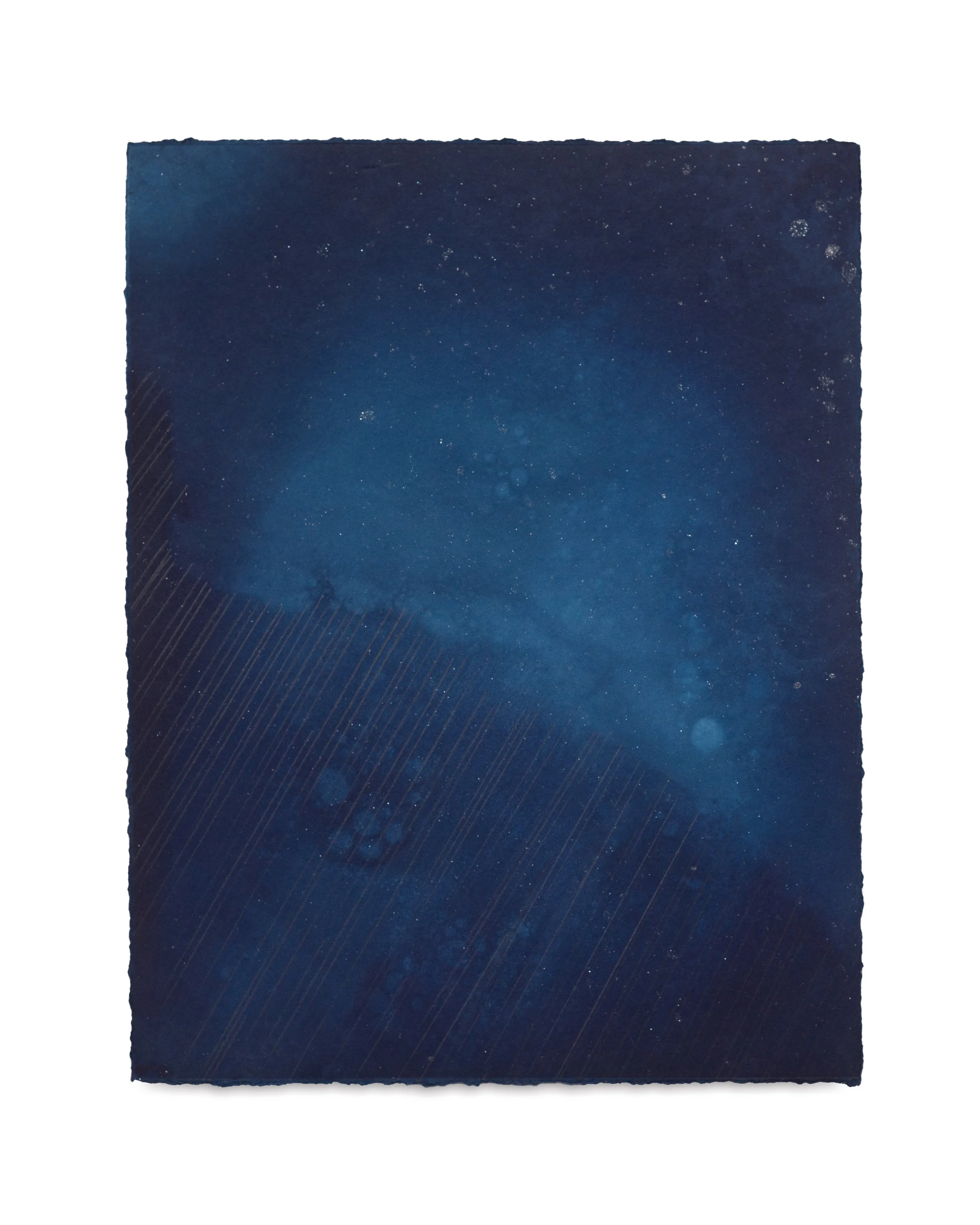
Tsukishigure (Rain in the Moonlight)
Natural Indigo Dye, Pure Silver Powder, Graphite, Hahnemühle Paper
11 x 8.5 in (27.94 x 21.59 cm)
Drawing 222 of 2000
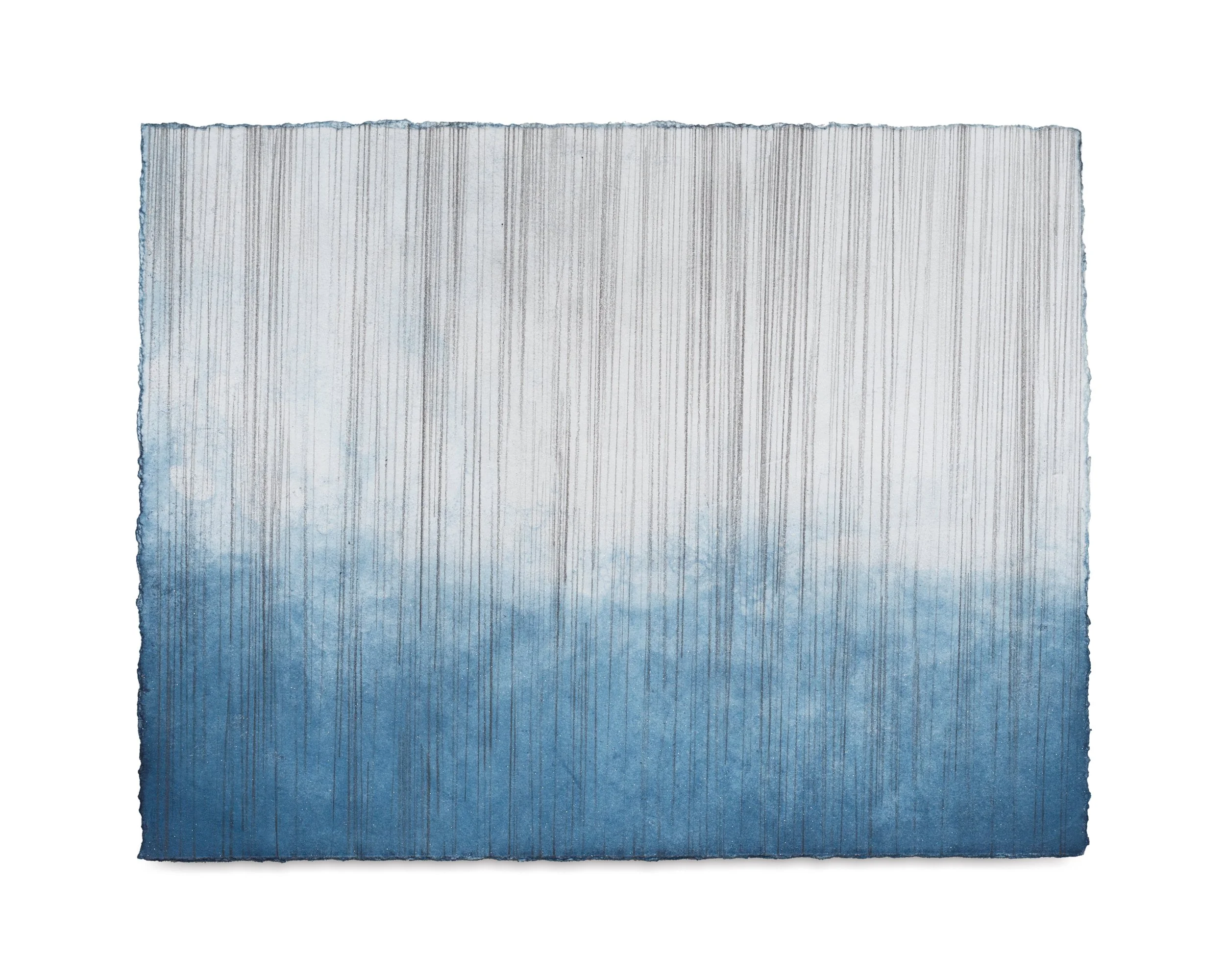
Shinotsukuame (Intense Rain That Falls Heavily, Is Very Fine and Strong like the Bamboo Grove at Shinotake), 2021
Natural Indigo Dye, Pure Silver Powder, Graphite, Hahnemühle Paper
8.5 x 11 in (21.59 x 27.94 cm)
Drawing 0298 of 2000
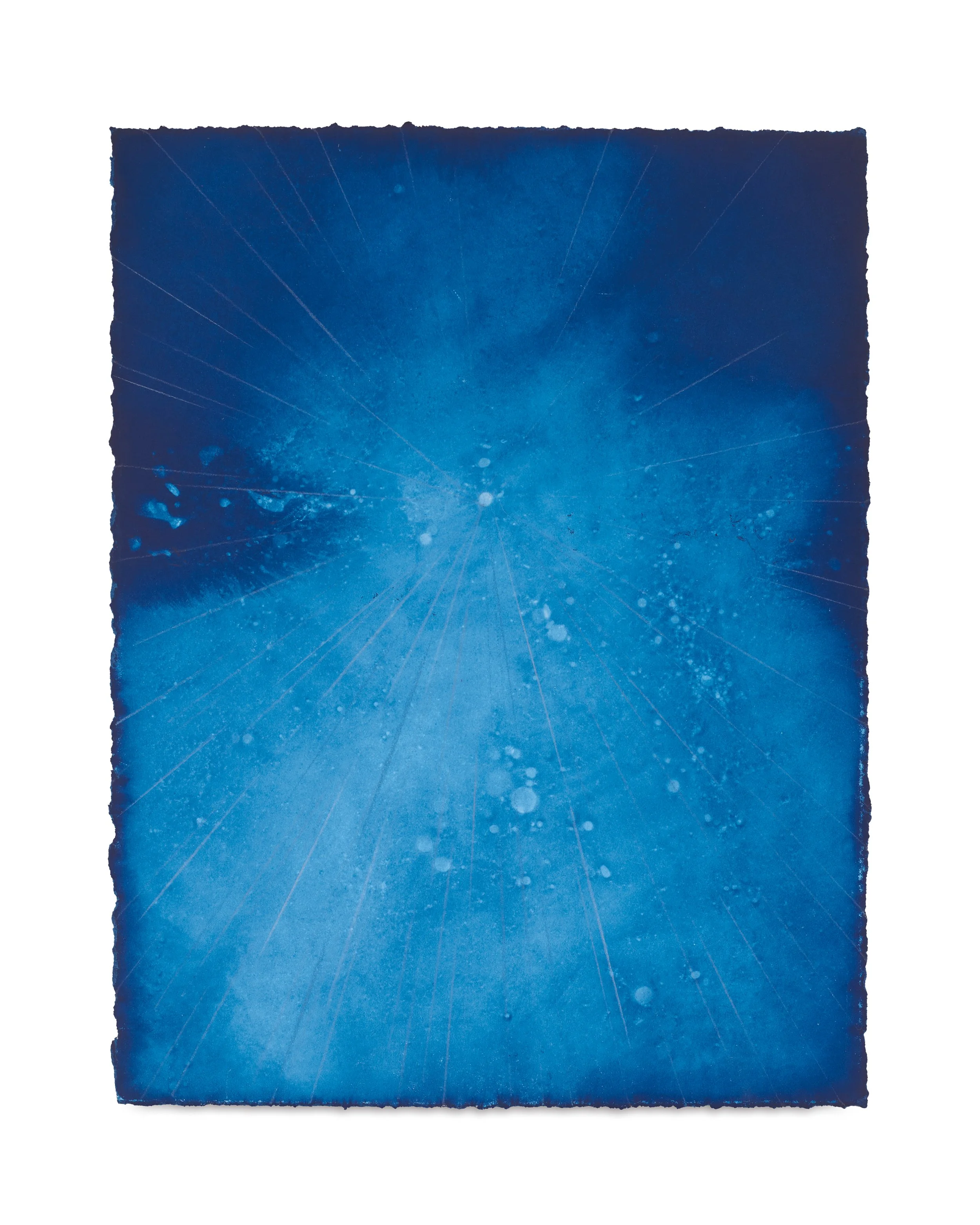
Uki (Praying for Rain)
Natural Indigo Dye, Pure Silver Powder, Graphite, Hahnemühle Paper
11 x 8.5 in (27.94 x 21.59 cm)
Drawing 887 of 2000
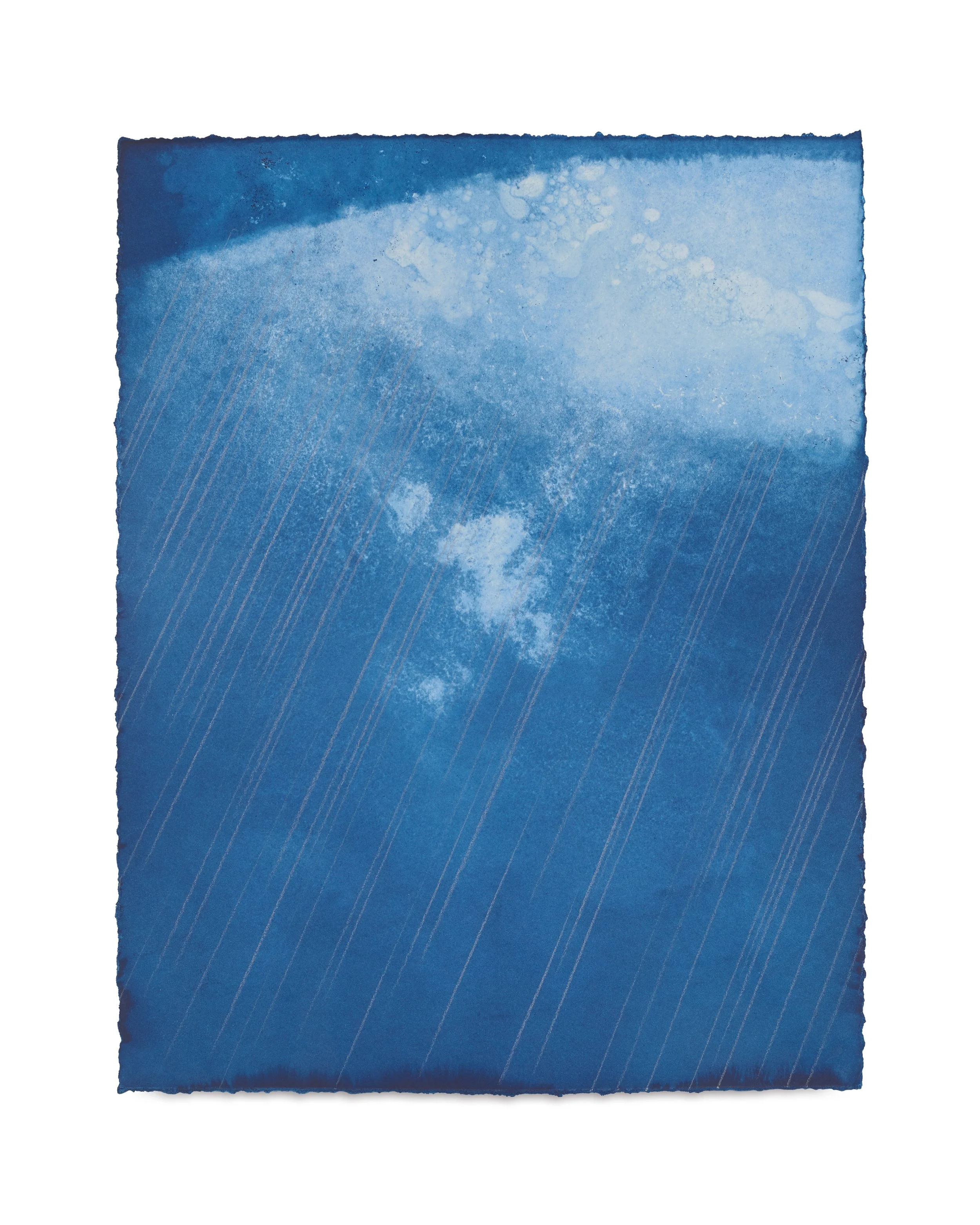
Eishū Gyokuu (Rain as Beautiful as Marble, Falling from the Mountain Where Monks and Deities Live)
Natural Indigo Dye, Pure Silver Powder, Graphite, Hahnemühle Paper
11 x 8.5 in (27.94 x 21.59 cm)
Drawing 1081 of 2000
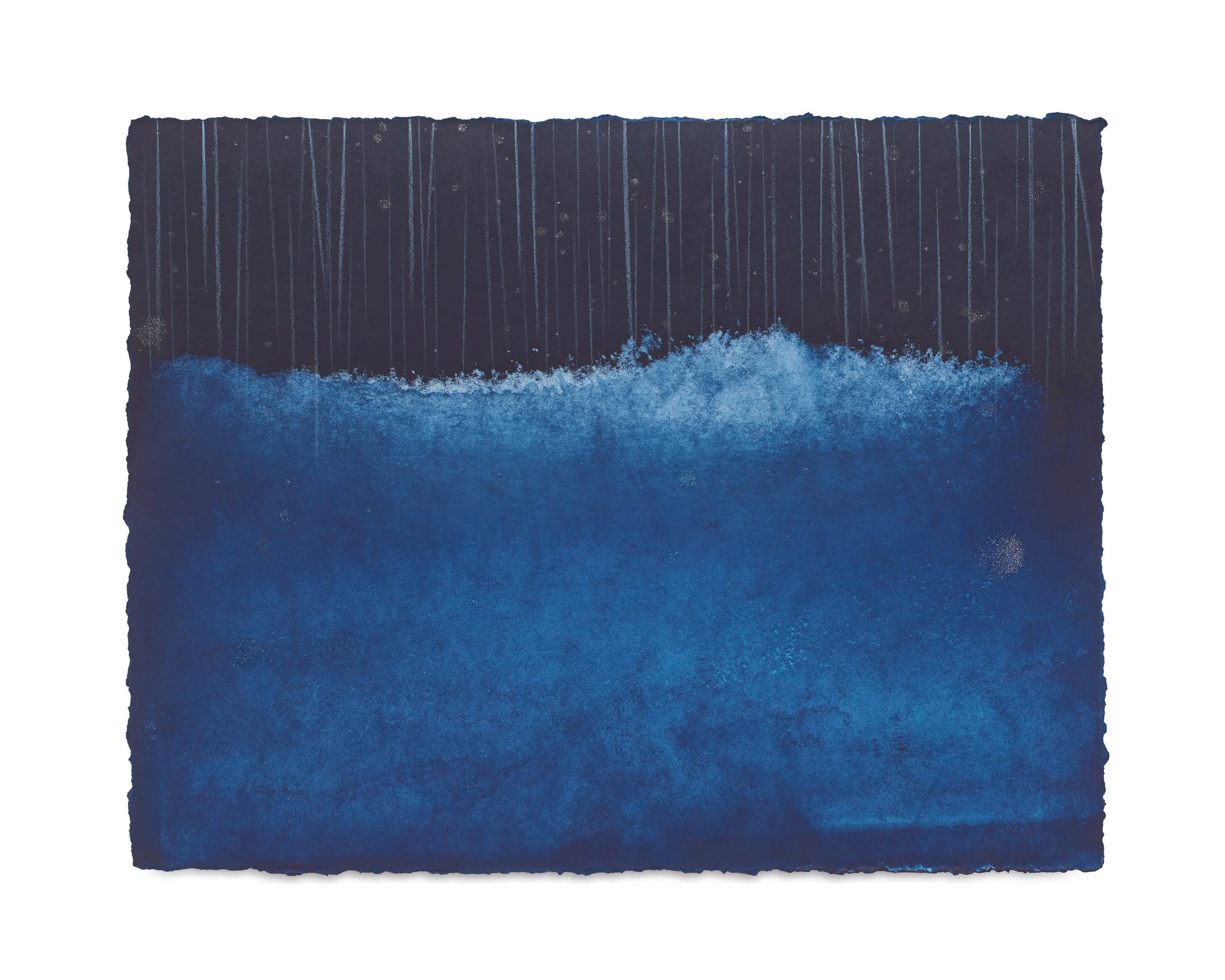
Sau (Rain That Falls on the River Shoal)
Natural Indigo Dye, Pure Silver Powder, Graphite, Hahnemühle Paper
8.5 x 11 in (21.59 x 27.94 cm)
Drawing 1151 of 2000
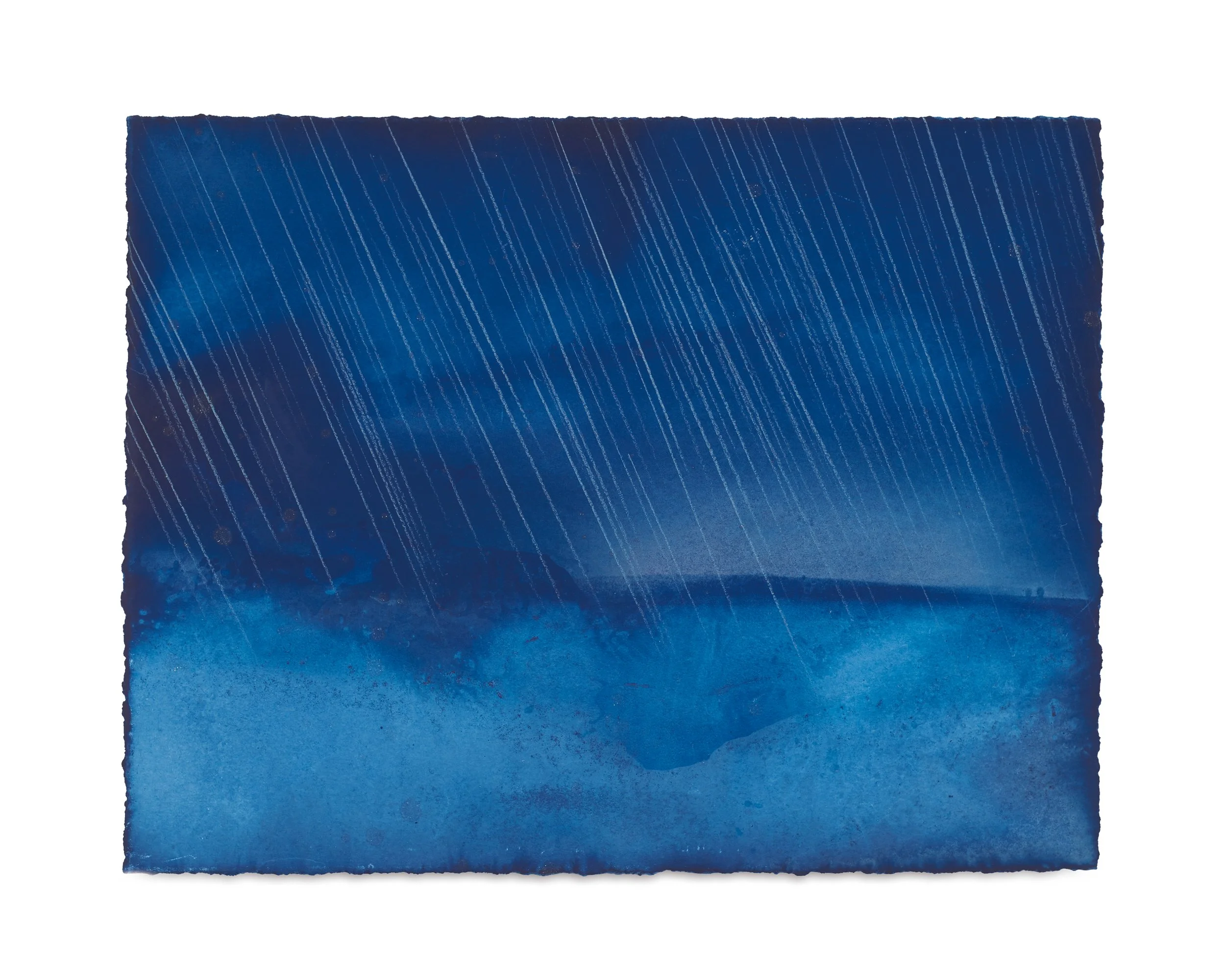
Sanbaine (A Sudden Evening Storm That Occurs So Quickly, One Has No Time to Make Even Three Bundles of Rice)
Natural Indigo Dye, Pure Silver Powder, Graphite, Hahnemühle Paper
8.5 x 11 in (21.59 x 27.94 cm)
Drawing 1152 of 2000
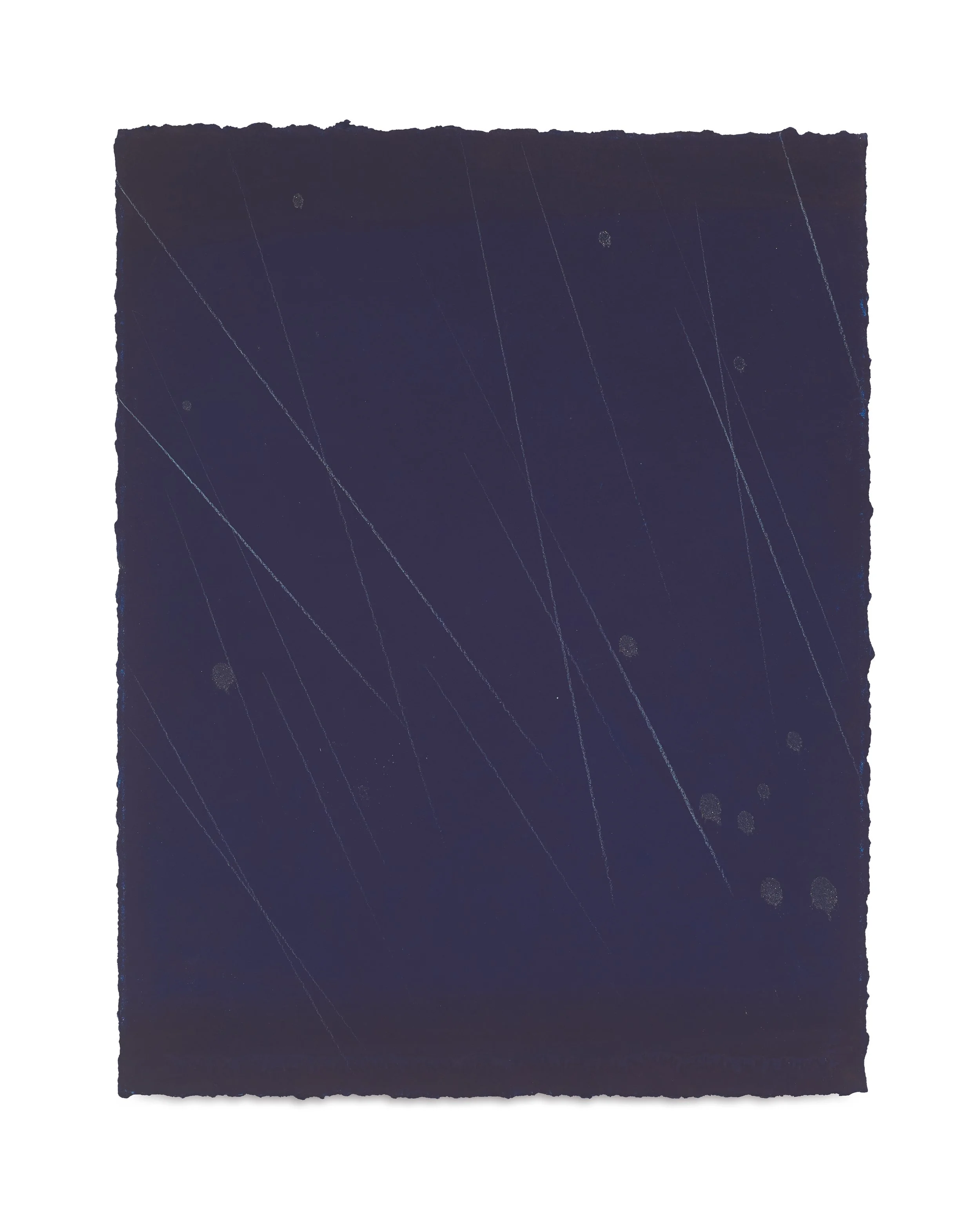
Ushō (To Sing While Being Rained upon and Wet from the Rain)
Natural Indigo Dye, Pure Silver Powder, Graphite, Hahnemühle Paper
11 x 8.5 in (27.94 x 21.59 cm)
Drawing 1354 of 2000